
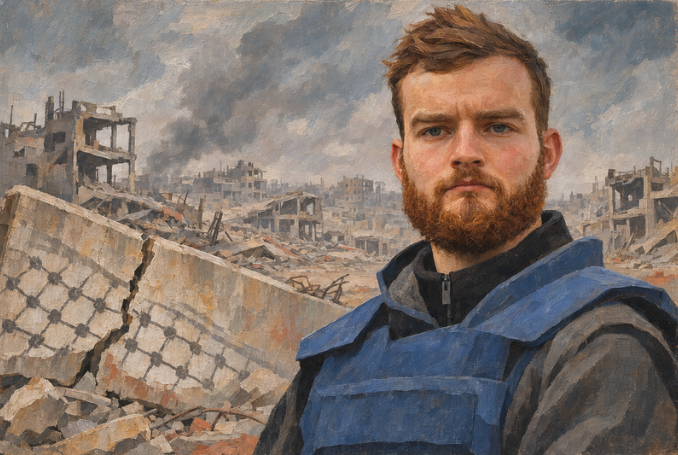
Robert Inlakesh examines how October 7 reshaped global opinion, regional resistance and Israel’s trajectory amid continuing genocide and unresolved wars.
“Was it actually worth it?” and “What has truly been achieved?” are amongst the most commonly asked questions about the decision taken by the Qassam Brigades of Hamas on October 7, 2023. Three years on, it is clear that a lot has changed; therefore, answering this question requires addressing what has actually transpired.
It is universally known that the past three years have been packed with horrific atrocities. A live-streamed genocide, ethnic cleansing, and the mass destruction of entire cities, villages, and refugee camps have all played out before our eyes. The suffering that has been inflicted is immeasurable, and the terror inflicted on civilians by Israel has not only impacted Gaza, but has expanded across the region.
Keeping this in mind, it would be irresponsible to provide an analysis that attempts to make a calculation as to what human suffering is worth. Instead, we will look at a few key changes that have come as a result of what was dubbed ‘Operation al-Aqsa Flood’.
One of the most glaring shifts has come in the realm of popular opinion around the world, the most dramatic change being in American public opinion. Support for Israel was once a bipartisan issue; now support for Palestinians has become the bipartisan consensus, with the only exception being older Republicans who still hold favorable views of the Israelis. On the Public Relations front, the Israelis have been exposed and lost all credibility, leading to candidates running to office and basing their entire campaigns on their anti-Israeli sentiments.
This global isolation may not have resulted in major repercussions yet, but this is only due to the enormous amount of resources that are being piled into elected officials, specifically to ensure that public opinion does not impact government decision-making. Despite this, some smaller measures are already being taken.
On the war front, the Israelis decided to expand their aggression on Gaza, chasing “total victory” in what Israeli Premier Benjamin Netanyahu dubbed a “seven-front war”. In doing so, Tel Aviv sought to dismantle the Iranian-led Axis of Resistance. So far, two wars against Iran have failed to bring about their desired goal of regime change.
Although they managed to physically destroy much of Gaza’s infrastructure, some dozen armed resistance factions operating out of the besieged coastal territory continue to operate. In Lebanon, the Israelis managed to score tactical military victories against Hezbollah through assassinations and their infamous indiscriminate pager attacks, convincing their public temporarily that they had defeated the group.
In March of this year, it became apparent that Lebanese Hezbollah was far from defeated and still possesses a large arsenal of strategic weapons and undoing much of the propaganda effects that the previous operations against Lebanon had in 2024. When it comes to Ansarallah in Yemen, Israeli airstrikes had little impact on the Yemeni rate of missile fire and ability to lock down the Red Sea. Through its expansion into Syrian territory, Israel has also paved the way for another front to open at any time.
There is no front where the Israelis have proven successful in dismantling or defeating their opposition. Yet, on October 12, the Institute for National Security Studies published an analysis noting that the Israeli armed forces continue to pursue a post-October 7 military doctrine that promotes the idea of non-stop war. The idea is that surrounding Arab States are not genuine nations, but instead consist of a series of tribes, meaning that the goal is to weaken and destabilize these countries.
Although expanding the territory they physically occupy, the Israelis have developed no clear endgame and are unable to pursue their ground wars to completion.
Israeli society has also shifted further towards the ultra-nationalist right, normalizing genocidal rhetoric and isolating Palestinian citizens of Israel, which ended up resulting in a major shock to the Jewish population upon voting day. Internally, the society has become more divided and more fanatical.
It is also estimated that around a million Israelis have left the country over the past three years, as tens of thousands of businesses have disappeared under the weight of a burdened war economy. Tourism has also dramatically declined.
This combination of changes is a cocktail for the collapse of a state project altogether. Global isolation, the decline of the Zionist Lobby’s power, a shift in military doctrine that envisages never-ending war, and the inability to claim victory on any of the active fighting fronts all indicate that Israel is stuck.
These are just some of the major changes that have occurred since October 7, 2023, which have put Palestine under the global spotlight and transformed it into the central cause of this generation. Israel’s goals prior to Operation Al-Aqsa Flood have dramatically shifted.
Gaza was left to suffer in silence, having tried every possible avenue in order to alter their course; an armed offensive was the final bid to effect change. Despite the immense suffering of the people, they can no longer be ignored, and the will of a people, living in a territory of only 140 square miles, has altered the course of global politics and history as we know it.
What is perhaps most important to note is that the genocide and regional war are not yet over. Meaning that it is perhaps too early to come up with a definitive answer as to what the impacts of Operation al-Aqsa Flood will end up being.
– Robert Inlakesh is a journalist, writer, and documentary filmmaker. He focuses on the Middle East, specializing in Palestine.