
By Nadia Naser-Najjab & Ilan Pappe
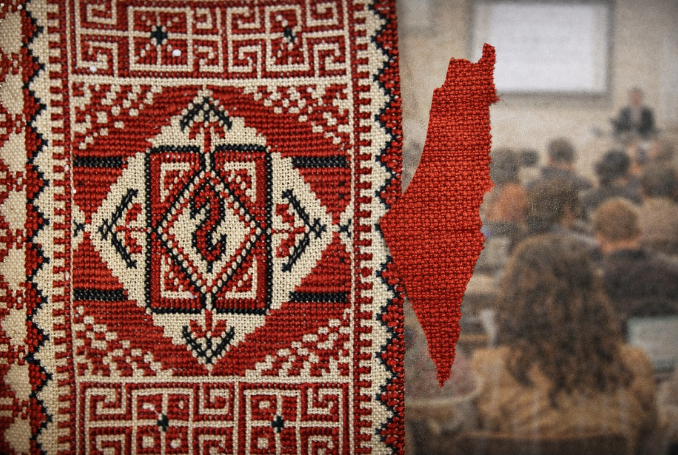
On June 5, 2025, the European Centre for Palestine Studies (ECPS) hosted a workshop titled “Cultural Resistance – Heba Zagout Cultural Resistance Prize.” The event highlighted the enduring power of Palestinian cultural expression in the face of ongoing violence, repression, and attempts at erasure. Organized and led by ECPS postgraduate students, the workshop exemplified their commitment to ensuring that Palestinian narratives remain central to our academic and public engagement.
At the heart of this effort was Naema Aldaqsha, a PhD student from Gaza, who coordinated the event with remarkable dedication while balancing her academic responsibilities and caring for her newborn baby, Iliya. She was joined by fellow postgraduate students, Rami Rmeileh, Abdullah Al-Anjari, Imran Ahmed, Basel Khalaily, and Aya Hasegawa, each of whom contributed research and presentations that celebrated, interrogated, and expanded understandings of Palestinian cultural life.
The prize was named in honor of Heba Zagout, a Gazan artist killed alongside her son in an Israeli airstrike on October 14, 2023. Her artwork embodies Palestinian resilience and the insistence on asserting culture and heritage even in the most devastating circumstances. In naming the prize after her, we honor not only Heba but also the many artists, journalists, poets, and cultural workers who have stood firm in the face of colonial attempts to extinguish a vibrant society, its life and culture.
The workshop opened with an introduction by ECPS co-director Dr. Nadia Naser-Najjab, followed by a message from co-director Professor Ilan Pappé, who was unable to attend in person. Rami Rmeileh then skillfully chaired the proceedings, situating the discussions within a broader understanding of cultural resistance.
Our keynote speaker, Iman Hammouri, director of the Popular Arts Center, joined us online from Palestine to offer a powerful reflection on the role of cultural work in resisting Israeli repression, particularly in Gaza amid the ongoing genocide. Drawing on her own experience and that of her colleagues, she illuminated how Palestinians continue to safeguard their cultural heritage against colonial tools and policies that have persisted since the British Mandate.
ECPS students presented a series of powerful papers exploring cultural resistance across diverse contexts. Abdullah Al-Anjari examined the historical and symbolic significance of the Orient House; Aya Hasegawa discussed Palestine solidarity movements in Japan; Imran Ahmed reflected on creativity and imagination as tools of solidarity; and Basel Khalaily analyzed Palestinian resistance within Israeli football. Following audience voting, Basel Khalaily and Aya Hasegawa were awarded the Heba Zagout Prize for their outstanding contributions and critical engagement with the theme.
These presentations underscored the centrality of cultural resistance to the Palestinian struggle. Recognizing the importance of sharing this work more widely, the ECPS co-directors proposed publishing the students’ contributions as a special issue with The Palestine Chronicle. Editor Dr. Ramzy Baroud not only welcomed the idea but expanded it into a long-term collaboration between ECPS and the Chronicle, including both a special issue and the creation of a dedicated ECPS page.
This partnership reflects our shared commitment to making research accessible and demonstrates how academic work can be both engaging and impactful. As the project expanded, we decided to broaden the scope of the contribution to include additional students and alumni. This page would serve as a long-term platform for showcasing ECPS research, student initiatives, and collaborative projects, ensuring that scholarship on Palestine remains publicly engaged, widely available, and rooted in the principles of cultural resistance.
What a wonderful idea! The European Centre for Palestine Studies is not familiar to us in Canada.
A collaboration between THE PALESTINE CHRONICLE AND the ECPS would be welcomed
so we could be tuned into the wonderful work of the ECPS.
I look forward to finding out more about the centre and the work being done to promote Palestinian arts and culture to the world.