

In this analysis, Robert Inlakesh examines Israel’s evolving war doctrine after October 7, focusing on the renewed Lebanon front. He argues that core assumptions about deterrence, short wars, and strategic supremacy are increasingly at odds with reality, as the confrontation with Hezbollah exposes deeper structural limits.
Total victory, expansionism, and security-oriented deterrence – these are core themes that Israeli Prime Minister Benjamin Netanyahu has promoted as integral to his existential “seven-front war” for survival. Yet, this image of supremacy and control that was sold through official State propaganda for 15 months was discredited by Hezbollah in just over 40 days.
“We crippled Hezbollah, taking out most of its leaders and much of its weapons arsenal,” Netanyahu boasted during his September 2025 United Nations General Assembly (UNGA) address. Tel Aviv’s Defense Minister Israel Katz also spent the duration of the 15-month-long ceasefire, bragging about his military’s alleged ‘defeat’ of Hezbollah, something he had claimed occurred prior to the November 27, 2024, cessation of hostilities.
By April 16, upon US President Donald Trump’s declaration of a Lebanon 10-day ceasefire, the Israeli prime minister had then been set back to declaring that Israel “had not yet finished the job”. From “total victory” on all fronts in sight, to trying to convince a northern population mired in distrust that defeating Hezbollah will require “a sustained effort, patience and perseverance, along with skillful diplomatic maneuvering.”
Although the latest US-Israeli offensive against Iran began on February 28, a regional war was truly triggered on October 7, 2023. Judging the regional war as a conflict that began earlier this year robs it of its vital context, because a very different Israeli strategic thinking has manifested itself over the past years.
The Collapse of Israel’s Deterrence Doctrine
Operation al-Aqsa Flood, the name given to the offensive launched by the Al-Qassam Brigades on October 7, 2023, reshaped West Asia in ways that many analysts have still failed to adapt their analyses to. While there has been an enormous focus on the event as purely a mass casualty attack on Israeli civilians, this characterization of what occurred that day is deliberately misleading for a range of reasons.
The more pivotal component of the assault was its military achievements and subsequent implications. A total of 373 Israeli combatants were killed that day, to 695 non-combatants, along with 71 foreigners, a statistical breakdown that is deliberately missed, but in and of itself paints quite the story than that presented in the corporate media.
The Southern Command of the Israeli Army collapsed within only a few hours, its elite AI-powered technology, layers of high-tech security equipment, superior weapons systems, and one of the world’s most sophisticated intelligence agencies all proved futile in the face of a few thousand fighters armed with light weapons.
Only a day later, on October 8, 2023, the Lebanese resistance movement Hezbollah entered the conflict and waged a support front battle in defense of Gaza. First, the group launched rockets and guided anti-tank munition attacks against Israeli targets in the illegally occupied Sheba’a Farms region. Only when Israel began attacking civilian targets in Lebanon did Hezbollah then choose to shift its fire and eventually begin targeting Israel’s northern settlements, such as Metulla and Kiryat Shmona.
In his book ‘War’, American journalist Bob Woodward, who laid out that in private communication with officials from within the Biden administration, said that Benjamin Netanyahu was particularly worried about the damage that could be done if Hezbollah decided to launch an attack as intense as the one carried out by the Palestinian factions from Gaza. Yet, no such attack ever came.
What developed was a back-and-forth trade of fire, one that former Secretary General of Hezbollah, Seyyed Hassan Nasrallah, stressed would continue until a ceasefire was reached with Gaza.
However, it appears as if the calculations of Hezbollah and its ally Iran – that eventually drew the Islamic Revolutionary Guard Corps (IRGC) to respond to an attack on the Iranian embassy in Syria – were based upon a misconception; at least this is what Israeli officials have expressed. In June of 2025, former Israeli Ambassador to the US, Michael Herzog, stated that Iran and Hezbollah had “completely misread” Tel Aviv’s intentions. “They failed to understand that post Oct 7, Israel is a totally different country”, he continued.
From Short Wars to Strategic Overstretch
Since the 1950s, the Israeli military has aimed to fight short wars. This was born of the concept, communicated by its first Prime Minister, David Ben-Gurion, that due to the large number of threats, the Israeli military should focus on achieving quick victories and not become bogged down in long wars of attrition.
As the United States would later become its chief backer, it greatly impacted Israel and its own military practices. The US’s transition from conventional warfare to a new counterinsurgency doctrine in 2006 was an important marker. When this is coupled with Israel’s shift to “non-conventional” warfare during the Al-Aqsa Intifada, meaning that it shifted towards “targeted assassinations”, the use of special forces teams, and more heavily utilizing its air power, a clear trend had been developing.
In order to keep with its short-war doctrine, during its 2006 war against Lebanon, Israel developed the infamous Dahiyeh Doctrine, meaning that it implemented a strategy of collective punishment as a “deterrence capacity” tactic and to stave off a future war by imposing an enormous civilian cost to any group that engages in resistance against it. This was then put into practice time and time again in the Gaza Strip.
Suddenly, in October of 2023, this all began to change and the Israeli military suddenly found itself forced to adapt to fighting in a way it was far from used to, entering what the Jerusalem Strategic Tribune calls “A New Era Of Long Wars”. On the concept of the short wars doctrine, for the Begin-Sadat Center for Strategic Studies at Israel’s Bar-Ilan University, Col. (res.) Gur Laish, wrote the following:
“The first commandment of Israel’s security concept was that Israel would never be able to force an end to the conflict on its antagonists because it is simply too small relative to the collective Arab and Muslim world. This approach created the dynamic of cycles of short wars. Israel was destined to mobilize for a significant clash once every few years, to beat the enemy in a short and powerful war, and thereby gain a few years of relative calm. Israel used these periods of calm, together with the assets it gained during the wars (time, territory, deterrence, strategic stability), to transform from a tiny young country into a regional military and economic power.”
Having avoided long wars, with a citizen army that is highly risk-averse, what ended up happening in a post-2006 Lebanon war world is that defeating Hezbollah became too costly a task. Therefore, what actually developed was that it was truly Lebanon that had achieved deterrence against Israel, something that lasted for 17 years.
While Hezbollah was too powerful a military movement to take on, with an open supply line from Iran and having later accrued battle experience during the Syrian War, the resistance in Gaza was a far less sophisticated set of movements militarily. This meant that Israel could use the groups as a punching bag, continuing to fight their short wars, developing the “mowing the lawn” strategy, which is to say that Tel Aviv used its wars against Gaza to try to prevent a serious military challenge from rearing its head.
This brings us back to October 7, 2023, when the Israeli leadership realized that their Gaza strategy had failed; their concept of fighting short wars, while making incremental gains in their regional project, had collapsed.
The Hezbollah Shock and the Limits of Israeli Power
Therefore, the Israelis launched their indiscriminate pager attacks in Lebanon that inflicted over 2,000 injuries and dozens of deaths, branded even by the former Director of the CIA, Leon Panetta, as acts of “terrorism”. This took place in September of 2024, shortly after which the assassination of the Hezbollah senior leadership was ordered. In order to kill Seyyed Hassan Nasrallah, Israel killed around 300 civilians in the southern suburbs of Beirut.
Hezbollah then fought Israel to a standstill on the ground, while failing to deliver the kinds of missile blows that many had previously expected it could inflict. When the November 27, 2024, ceasefire was declared, it registered as a major setback for Hezbollah, especially in the political sphere, yet the concept of its defeat and that it had been battered into submission was flatly false.
Despite the group clearly working to reconstitute itself after the blow it had received, the Israelis doubled down on their propaganda about their great victory. This impression was reinforced by the fact that, over the 15-month ceasefire period, the Israelis violated the agreement 15,400 times according to UNIFIL, killing around 370 Lebanese without any shots being fired in return.
In early March, when Hezbollah fully committed itself to the war, the shock of its power inflicted an immediate psychological blow on the Israeli collective psyche, in particular the population of the north.
When the Israeli military entered the ground, the Lebanese group used the likes of FPV drones and Anti-Tank Guided Missiles (ATGMs) to strike around 150 tanks, as the Israelis failed to seize control of villages more than a few miles deep into south Lebanon.
Even the Washington think tank, the Foundation for Defense of Democracies (FDD), which is usually a champion of every and all offensive Israeli military operations, wrote the following to explain why Israel wouldn’t achieve its objectives:
“Israel would have to occupy hostile, unpacified terrain over extended lines while simultaneously pushing north through south Lebanon, up the coast toward Dahiyeh, and along Lebanon’s northeastern border with Syria—all while remaining undermanned and overcommitted across other vital active fronts, and prepared for additional theaters to ignite. Air power alone cannot disarm Hezbollah. Israel’s sustained aerial campaign over the past 15 months hindered, but didn’t halt, Hezbollah’s comprehensive regeneration.”
In the grand scheme of any regional war, the Israelis do not have the ability to wage a ground war on the much larger Iranian army, nor could they even hope for proxy groups in Iraq to prove successful in traversing such mountainous terrain. The Iranians, on the other hand, have a formidable ally that can indeed engage the Israelis on the ground successfully.
This January, Israeli military chief Eyal Zamir set forth his five-year post-October 7 framework for the armed forces. A plan that seeks to spend $111 billion over a decade and that rests on the pillars of “readiness for war”, “return to fitness”, in addition to “force building”.
Despite the immense amount of funds being pumped into the Israeli military, the fundamental issue it faces is that the leadership is pursuing an aggressive policy across the region. Everyone from Netanyahu to his opposition leader, Yair Lapid, is talking about a “Greater Israel” that stretches from the Euphrates to the Nile River. At the same time, the Israeli society and citizen army are not being given nearly enough time for reconditioning that would enable such a long war of attrition to prove successful.
Instead, they are being sold lies about quick victories, entering in and out of new phases in the regional war; the Israeli casualty data they are being fed is clearly watered down. The sudden emergence of Hezbollah as a formidable foe, capable of inflicting serious blows against Israel, has caught the Israeli leadership in its own lies. The Israelis cannot defeat Hezbollah in a stand-up fight and have no idea how to deal with the monster they have awoken following the assassination of Seyyed Hassan Nasrallah.
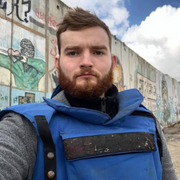
– Robert Inlakesh is a journalist, writer, and documentary filmmaker. He focuses on the Middle East, specializing in Palestine.