
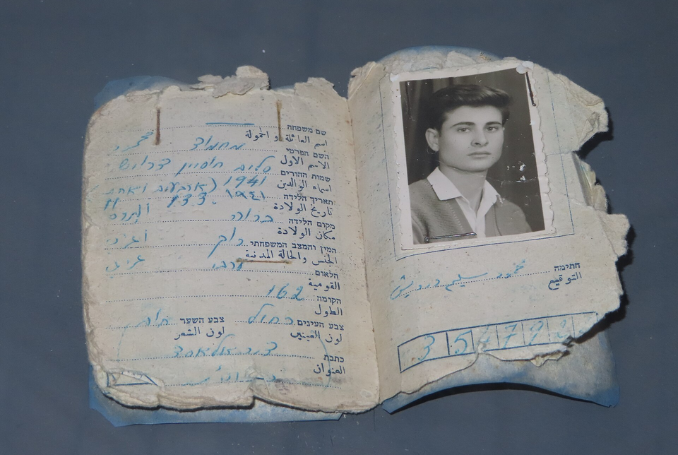
By Iman Hamouri
Palestine’s deeply intertwined cultural and political landscapes are not just vehicles of expression but vital tools of resistance that challenge oppression.
In a world where native narratives are constantly contested by colonizers, Palestinian cultural production (including cinema, folkloric dance, music, and visual art) is a defiant assertion of existence and an unwavering call for freedom.
Since the British Mandate (throughout the Nakba, 1970s and 80s, and the First Intifada in particular), art and culture have been powerful means of Palestinian resistance. In various guises (including cartoons, paintings, poetry, songs, writing, and traditional dance), art and culture played a significant role in mobilizing youth and supporting activism. Elements of Palestinian heritage, like dabkeh (Palestinian traditional dance), also regularly featured in marches and demonstrations across Historical Palestine.
The Israeli occupation, in recognizing the power and potential of art as a tool of resistance, responded by arresting artists, whether dancers, singers, and/or visual artists.
But Palestinians have always found ways to confront such repression. For example, in the First (1987–1993) and Second (2000–2005) Intifada, when the Israeli military imposed strict curfews and only allowed people to go out every two to three days for a few hours, traditional dance groups, including El-Funoun, which I am a member of, secretly gathered to rehearse for a few limited hours. Even when we risked staying past curfew, we always found ways to safely return home.
Palestinian artists and art movements in exile were also highly active in both uprisings, producing significant national works outside Palestine. They included the renowned poet Mahmoud Darwish, whose poetry was transformed into national songs that still resonate today. Singing groups like the diaspora-based Al-Ashiqeen, which emerged at this time, continue to strongly influence the contemporary Palestinian cultural landscape. But even exile did not spare Palestinian artists from persecution, as the case of the cartoonist Naji Al-Ali, who was assassinated in Britain in 1987, demonstrated. Far from being silenced, the father of the famous ‘Handala’ character (the Palestinian boy with his hands tied behind his back) was instead subsequently revered as a martyr who died in the service of the Palestinian cause.
In the Second Intifada, cultural institutions played a key role in documenting and communicating the reality on the ground to the ‘international community’, connecting with international artists to expose the true face of the occupation and challenge the illusion of a ‘peace process’. One important initiative was “100 Artists to Palestine,” which invited artists to witness the situation firsthand, with many experiencing a profound artistic and personal transformation as a result. They included the Belgian artist and choreographer Alain Platel. Initially unfamiliar with the situation, his visit exposed him to the harsh realities, including military checkpoints, curfews, and the daily suffering of Palestinians. The experience had a powerful and lasting impact on his worldview and creative direction.
Platel, upon returning to Belgium, wrote an article about Palestinian life in the Second Intifada, documenting suffering and the lived experience of apartheid. He later became an activist for Palestine, powerfully expressing this commitment through his artistic work.
The Palestinian art and cultural sectors also supported the international academic and cultural boycott movement, while calling on international artists to refuse invitations to perform in or engage with Israel. One of the most notable was Roger Waters, the hugely accomplished musician and co-founder of the internationally acclaimed rock group Pink Floyd. In 2006, he responded to an activist request by relocating his concert, originally scheduled for Tel Aviv, to Neve Shalom, an Arab–Jewish village.
Later, after speaking to Palestinian cultural institutions, engaging members of the boycott movement, and visiting Bethlehem, his position changed completely, and he became a vocal and committed advocate for Palestinian rights.
As Israel’s genocidal war continues, Palestinians continue to reveal the brutal face of the Israeli occupation to the world. Amid killings and destruction, their voices endure, turning pain into testimony and resistance. They are not only artists or intellectuals but also doctors in Gaza’s Al‑Shifa and Al‑Aqsa Martyrs hospitals, who sing while working under the constant threat of death, affirming both their commitment and their humanity in the process.
Amid genocide, Palestinians use art to connect with other oppressed peoples. On social media, Native Americans and Palestinians share a moment of solidarity, blending Palestinian dabkeh with Native American traditional dance. This powerful act of shared resistance conveyed a unified struggle against colonialism and injustice and reminded the world that the fight for freedom transcends borders.
Art, and in particular mental health and psychosocial support programs implemented by cultural institutions, has also been a vital tool for healing in Israel’s multiple post-2000 assaults on the oPt. The Popular Art Centre, which has operated in El-Bireh and Ramallah since its establishment in 1987, was one of the first to launch art-based nationwide initiatives focused on helping children and youth cope with trauma. Such efforts continue today, being focused in particular on Gazan children and youth confronted by genocide and displacement.
Palestinian artists and cultural organizations have long faced censorship, harassment, and restrictions, not only from the Israeli occupation but also from international donors and their toxic philanthropy. In 2019, donor interference escalated significantly, via the imposition of politically conditional funding that sought to silence the Palestinian narrative, as per Israeli pressure. For instance, the EU, in following USAID by adding an anti-terrorism clause to funding agreements, criminalized all forms of Palestinian resistance by requiring civil society organizations to screen their grassroots partners against biased criteria and police them, forcing a dangerous compromise on NGOs who wanted to continue working with the EU.
These conditions created divisions within Palestinian civil society. While some accepted, others rejected on principle, uniting to form the Campaign Against Conditional Funding. Other members of the Palestinian Performing Arts Network then worked through this campaign, successfully persuading most oPt-based art and cultural organizations, along with associated individuals (including directors, staff, and artists), to boycott EU and specific Member State funding. The EU’s supposed commitment to support freedom of expression, human rights, and democracy quite clearly does not extend to the oPt.
After October 7, conditionality became even more of a problem. As Western complicity in Israel’s genocide became unavoidable, a group of Palestinian organizations, networks, and coalitions rejected donor funding and launched the Owneh initiative, which seeks to break away from the colonial funding system and gain independence of Palestinian civil society organizations from outside interference.’ Its solidarity fund, shared resources, and platforms are intended to complement national campaigns and efforts, with the ultimate aim of enabling Palestinian cultural NGOs and actors to fully disengage from conditional funding.
Culture has been an essential accompaniment to the development of Palestinian resistance since the late 19th century, and it continues to sustain Palestinians in the face of a genocidal onslaught. When refracted through Palestinian agency and aligned with Palestinian resources, it is essential to the continued Palestinian struggle. International aid agencies, in resisting rather than building on this insight, have directly contributed to a situation where Palestinian cultural institutions are increasingly seeking to disengage from external financial assistance and work towards authentic cultural expression aligned with Palestinian national needs and priorities.
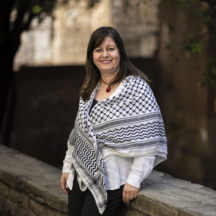
Iman Hamouri, a leading Palestinian cultural activist and director of the Popular Art Centre (PAC), has championed Palestinian heritage and art-based resistance for decades. A key figure in the Palestine International Festival and the Palestinian Network for Performing Arts, her role in advancing global cultural advocacy is well recognized.