
By Ari Jafari
My detachment is possible only because of our collective attachment, their stubborn refusal to accept the erasure that colonial logic demands.
Returning to Palestine
Returning to Bethlehem, Palestine, from abroad for the first time in two and a half years, I find much has changed. My time away has been the most significant and intense period of my life and my people’s collective life. Everything feels and looks different, and the geography has been rewritten…this means we can skip the mundane details.
Color-coded gates are now everywhere around the West Bank. You are lucky if you come across a yellow gate, as it will open at certain times and close at others, unlike red gates, which are permanently closed.
These gates are just the latest manifestation of a colonial project that has always worked toward racial segregation by making the lives of indigenous peoples unbearable and erasing their culture, history and existence. This is the systematic architecture of apartheid, a juridical–spatial regime designed to fragment and destroy Palestinian life and consolidate settler sovereignty. Of the various historical justifications that Zionism has offered on its own behalf, removal of the Palestinian population has always been central and foregrounded: far from inadvertent and/or unintended, mass displacement has always been integral and actively desired.
The modus operandi is clear: arrests of local leaders, checkpoints, destroyed infrastructure, extensive surveillance systems, filled prisons, large-scale troop deployments, and segregated bus roads. All this while settler communities blossom and flourish on stolen land adjacent to Palestinian villages and towns.
The contrast is deliberate, pedagogical even. From my home in Bethlehem, I can see the hills opposite teeming with gleaming settlements, whose red-roofed houses and manicured lawns appear almost intended to underline our own superfluity. They continue to expand and take more and more land, pushing us into smaller and more concentrated pockets of territory, with minimal resources to survive. What are these infrastructures of privilege and oppression, if not two sides of the same colonial coin?
Every day, I hear people around me talk about when the war with Iran will start. Every social conversation seems to start with speculation about when Trump will decide to strike Iran, and when we will wake up to the news that Iran has been hit. There’s a petrol shortage, not a real one, but one born from fear that there will be war, and Israel will cut off supplies. We exist in perpetual anticipation of the next catastrophe, our daily lives structured by imperial machinations beyond our control. But all of this is beyond me—I am neither scared nor bothered by the prospect of war.
Numbness and Emotional Shutdown
Reflecting on what I see around me, I can say one thing with confidence: I have been stripped of my feelings.
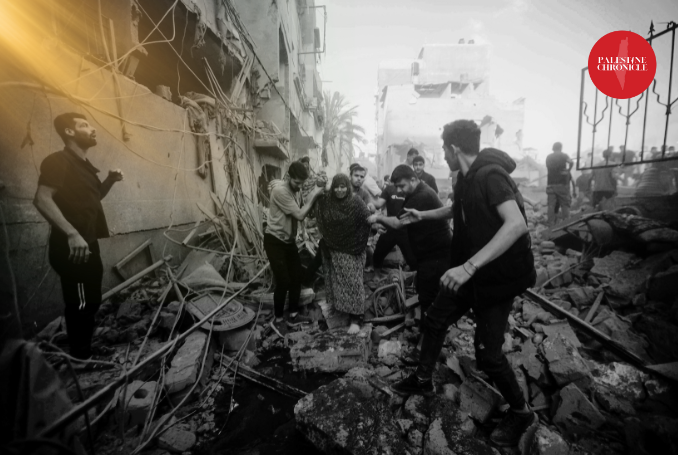
I do not know if psychology has a term for this emotional shutdown. But I can tell you that I can no longer watch videos coming out of the Gaza Strip or West Bank, nor scroll past images of white shrouds, Palestinians mourning loved ones, and families saying painful farewells.
I cannot bear the images of Gaza refugee camps being bombarded anymore, as the visual archive of atrocity has exceeded my capacity for witness. I cannot watch mothers and fathers, children and youth, and the elderly as they search desperately for water or food; nor can I endure water dripping through shapeless tents and the anguish of a father who waited eighteen years for his son to become a man, only to lose him. Each image a document of erasure and each plea a record of dispossession that my saturated consciousness can no longer metabolize.
I cannot watch Jerichoans and Hebronites being driven from their ancestral lands by intensifying settler attacks. A familiar pattern reasserts itself: indigenous communities uprooted by organized settler violence, historical claims invalidated by the brute fact of superior force. I cannot believe that settler violence prevents children from arriving safely at school. My heart simply cannot respond anymore.
But I feel as if I am closing this off not because I am empty but because I am too full—there is no space left to feel.
I inhabit two parallel worlds: one where everything around me is surreal and infuriating, and another where I feel absolutely nothing.
I cannot speak. My voice is choked out—I scream but no sound comes out.
I bleed inside, with invisible tears and blood. I’m scared but no part of my body flinches.
The unconscious knows what the conscious refuses. I do not sleep but endure nightmares, seeing bombardment, running for my life, and horrors inflicted on my home, family, friends, and refugee camp. Then I wake up and feel nothing.
Split Consciousness: Necessity, Pathology, and/or Luxury?
On January 30, I went to a concert of nostalgic Palestinian revolutionary music. When the music started, I felt I was simultaneously in two worlds. Feeling completely devoid of feeling, I nonetheless admired the spirit and liveliness of the audience members, enthusiastically singing along with the orchestra. But my friend and I do not join in and instead react with joking cynicism: ‘Oh yeah, now people from the audience are going to go throw stones at the army since they’re so filled up with this emotion of anger at the occupying power.’ The irony was bitter: we know that revolutionary fervor dissipates into the quotidian necessity of simply continuing.
The show finishes and we go back to normal life. Except normal life doesn’t exist in Palestine. Our consciousness is split; we carry on with determination, as there is no other option for now.
What is this split consciousness? Perhaps it is the defining condition of the colonized, oscillating between rage at injustice and the protective anesthesia of detachment? Perhaps my brain, in registering that I have reached a saturation point via the build-up of anger, bitterness, and darkness, now seeks to shield me from feelings and responses? Perhaps it has decided that feelings, at this moment, will detract from my drive to persist and continue, in the manner of my people, who have struggled against settler colonization for more than a century.
Numbness, I begin to understand, is how colonized peoples defend themselves against the unbearable. Frantz Fanon understood this, fully grasping how the colonized live in a zone of nonbeing, where human agency and emotional interiority become impossible.
Living means being detached from feelings, so as to stand in the face of this dark and uncooperative existence. This is not pathology but adaptation. This emotional foreclosure is not merely personal pathology but a form of psychic survival necessary in the face of the structural violence of settler-colonial occupation.
But in addition to being a necessity, emotional foreclosure is also perhaps a privilege—I have the luxury of numbness because others continue to feel, to resist, to insist on their humanity. I have the luxury of not having to confront the occupation every day. But I know that those who do will resist in multiple ways. Not necessarily through active resistance, as here just being a Palestinian is an act of sumud (steadfastness). Living in a permanent state of emergency, we come to see normalcy itself as a form of resistance, a refusal to grant the occupier the satisfaction of our total dissolution.
We resist by existing. This is our way of being. Here, in Gaza, in Jordan, in the United States, simply being a Palestinian is still an act of resistance. Amidst two and a half years of immense and traumatic bloodshed, or genocide, the word ‘survival’ appears somehow inadequate. This is more than biological persistence.
It is the refusal to be disappeared, the maintenance of human dignity under conditions designed to destroy it. My detachment is possible only because of our collective attachment, their stubborn refusal to accept the erasure that colonial logic demands. My privilege and our collective resistance are bound together in the ongoing dialectic of Palestinian existence.
– Ari Jafari holds a Ph.D. in Palestine Studies from the University of Exeter. Her research explores Palestinian refugees’ visions of return within various state formations. By analyzing data from the West Bank and Jordan, she addresses the implications for the Right of Return, self-determination, and decolonization from settler-colonialism.